
How Long Does Stroke Recovery Take? Timeline, New Treatments, and How to Accelerate Brain Recovery
- The Neuroplasticity Alliance
- Feb 24
- 4 min read
One of the most common questions after a stroke is:
How long does stroke recovery take?
The answer is complex — but modern neuroscience offers more hope than ever before.

Recovery timelines vary depending on stroke type, severity, location, and rehabilitation intensity. However, research increasingly shows that the brain retains the ability to adapt long after the initial event.
In this article, we explore:
The typical stroke recovery timeline
Whether you can fully recover from a stroke
Regaining speech after stroke
Stroke rehabilitation new treatments
Vagus nerve stimulation stroke research
Cutting-edge neuro rehab technology
How recovery may be accelerated
Understanding the Stroke Recovery Timeline
Recovery is often described in phases:
Acute Phase (Days to Weeks)
Stabilization
Reduction of brain swelling
Initiation of early therapy
Early Recovery (0–3 Months)
Rapid improvements are common
Neural networks reorganize
Motor and speech gains often emerge
Subacute Phase (3–6 Months)
Continued functional gains
Structured rehabilitation plays a major role
Chronic Phase (6 Months and Beyond)
Historically, patients were told recovery plateaus after six months.
However, research now shows the brain can continue reorganizing years after stroke due to neuroplasticity — the brain’s ability to form new neural connections in response to training (Krakauer et al., 2012).
Recovery does not abruptly stop at six months.The rate may slow — but plasticity remains.
Can You Fully Recover From a Stroke?
Some individuals regain nearly all prior function.
Others experience partial recovery but achieve meaningful improvements in independence and quality of life.
Factors influencing outcomes include:
Stroke severity
Brain region affected
Time to treatment
Intensity of rehabilitation
Overall cardiovascular health
Importantly, outcomes improve when rehabilitation is intensive, repetitive, and task-specific (Lang et al., 2009).
Regaining Speech After Stroke
Many families search: Can you regain speech after stroke?
Speech loss (aphasia) occurs when language centers are affected.
Research shows:
Intensive speech-language therapy improves outcomes
Repetition drives cortical reorganization
Early therapy improves prognosis
Gains can still occur in chronic stroke phases
Constraint-induced language therapy and high-frequency practice have demonstrated measurable improvements even years post-stroke (Pulvermüller et al., 2001).
How to Improve or Accelerate Stroke Recovery
Recovery is not just about time — it is about intervention strategy.
Cutting-edge research suggests stroke recovery may be accelerated when the following principles are applied:
1. Increase Therapy Intensity
Higher repetition leads to stronger neuroplastic change.
Studies show patients often receive far fewer repetitions in traditional rehab than required for optimal motor relearning (Lang et al., 2009).
Robotic-assisted therapy and immersive technologies increase repetition and engagement.
2. Pair Rehabilitation with Neuromodulation
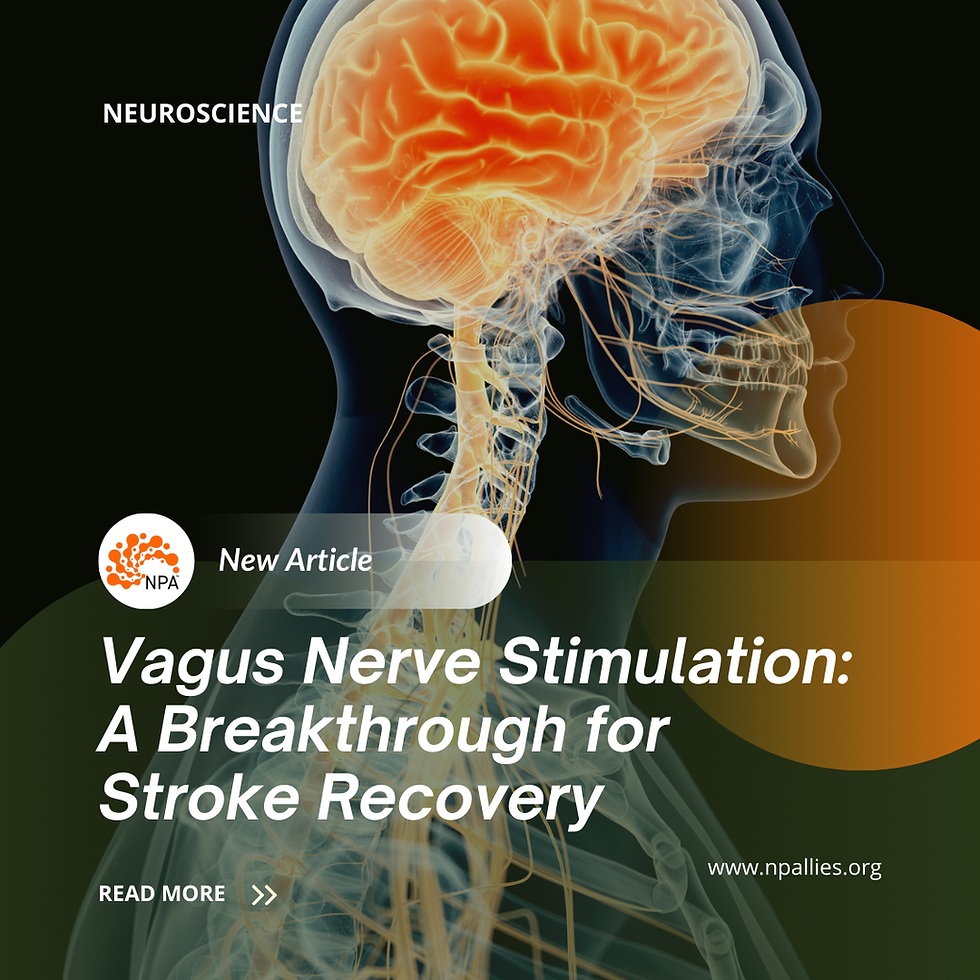
Vagus Nerve Stimulation (VNS)
Vagus nerve stimulation paired with motor training has demonstrated improved upper limb recovery compared to rehabilitation alone.
In a pivotal randomized clinical trial, VNS combined with therapy significantly improved motor outcomes in chronic stroke patients (Dawson et al., 2021).
This approach enhances plasticity during therapy sessions by amplifying neural signaling.
The FDA approved VNS for stroke rehabilitation in 2021.
3. Use Immersive Neuro Rehab Technology
Emerging technologies include:
Virtual reality rehabilitation
Robotics-assisted therapy
Brain-computer interfaces
Transcranial magnetic stimulation (TMS)
Sensory retraining platforms
Virtual reality therapy has shown improved motor recovery and patient engagement compared to conventional therapy alone (Laver et al., 2017).
4. Address Whole-Brain Health
Stroke recovery improves when the biological environment supports plasticity.
Research suggests that:
Sleep quality influences neural repair
Cardiovascular fitness enhances neuroplasticity
Blood glucose regulation supports recovery
Aerobic exercise increases brain-derived neurotrophic factor (BDNF) (Mang et al., 2013)
The brain heals more effectively in a regulated internal environment.
5. Continue Therapy Beyond Traditional Timelines
Modern stroke recovery breakthroughs emphasize that therapy intensity — not just time since stroke — predicts outcomes.
Even individuals in chronic stages have demonstrated improvements when exposed to structured, high-dose, targeted rehabilitation (Ward et al., 2019).
Recovery does not end — access often does.
Does Stroke Recovery Ever Stop?
Neuroplasticity research indicates that:
The adult brain remains adaptable
Motor and language networks can reorganize
Improvement is possible even years after stroke
While the rate of recovery may slow, the brain retains capacity for change.

Learn More at Rewiring Hope 2026
These topics will be explored in depth during:
Day 2: Recovering from Stroke
Rewiring Hope: The Neuroplasticity Summit 2026 | 📅 March 17 | 💻 Free Virtual Event
You’ll hear about:
Stroke recovery timelines
Vagus nerve stimulation
Neuro rehab technology
Real-world case studies
Emerging research
This is our 3rd Annual Summit with 7,000+ expected attendees.
👉 Register free at: www.rewiringhopesummit.com
References
Dawson, J., Liu, C., Francisco, G., et al. (2021). Vagus nerve stimulation paired with rehabilitation for upper limb motor function after ischemic stroke (VNS-REHAB). The Lancet.
Krakauer, J. W., Carmichael, S. T., Corbett, D., Wittenberg, G. F. (2012). Getting neurorehabilitation right: What can be learned from animal models? Neurorehabilitation and Neural Repair.
Lang, C. E., Macdonald, J. R., Reisman, D. S., et al. (2009). Observation of amounts of movement practice provided during stroke rehabilitation. Archives of Physical Medicine and Rehabilitation.
Laver, K. E., Lange, B., George, S., et al. (2017). Virtual reality for stroke rehabilitation. Cochrane Database of Systematic Reviews.
Mang, C. S., Campbell, K. L., Ross, C. J., Boyd, L. A. (2013). Promoting neuroplasticity for motor rehabilitation after stroke. Neurorehabilitation and Neural Repair.
Pulvermüller, F., Neininger, B., Elbert, T., et al. (2001). Constraint-induced therapy of chronic aphasia after stroke. Stroke.
Ward, N. S., Brander, F., Kelly, K. (2019). Intensive upper limb neurorehabilitation in chronic stroke: Outcomes and neural correlates. Journal of Neurology, Neurosurgery & Psychiatry.
Comments