

How to Boost Neuroplasticity
Discover Neuroplasticity
Your Brain and Central Nervous System Are Hardwired for Lifelong Adaptation
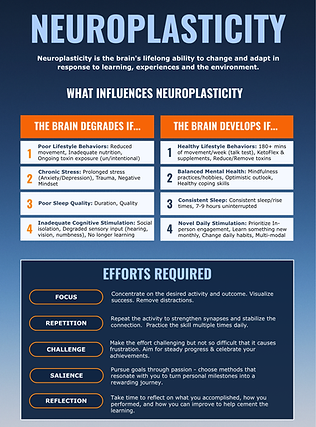
Its true superpowers are resilience and recovery. By aligning daily habits—nutrition, movement, sunlight, sleep, stress management, mindset, and mental stimulation—you trigger brain- derived neurotrophic factor (BDNF) and vital growth signals. At the same time, these habits clear out the inflammation and toxins that hold your brain back.
By optimizing your brain’s natural capacity for change, you ensure that every effort made toward recovery or cognitive improvement yields the greatest possible results.
Nutrition: Fueling Neuroplasticity from the Inside Out
Exercise: Movement as Medicine for BDNF and Blood Flow
A brain-optimized diet lowers inflammation, stabilizes metabolic health, and supplies the cellular building blocks required to grow new neurons and forge stronger neural pathways.
Physical activity is one of the most powerful natural catalysts for neuroplasticity. Regular exercise actively spikes brain-derived neurotrophic factor (BDNF), enhances cerebral blood flow, calms systemic inflammation, and stimulates the birth of new neurons.
Sunlight Exposure: Natural Light as a Neuroplastic Catalyst
Sleep: The Non-Negotiable Consolidation Phase
Early morning sunlight serves as a powerful, accessible catalyst for neuroplasticity. Consistent exposure to natural light optimizes sleep quality, sharpens focus, and actively enhances the brain’s ability to form and strengthen new neural connections.
Deep, restorative sleep is the exact window when
true neural rewiring occurs—facilitating memory consolidation, cellular toxin clearance, and the structural strengthening of new connections.
Stress Management: Protecting Plasticity from Cortisol Overload
Mindset: Embracing a Growth-Oriented Mental Framework
Chronic stress triggers a sustained elevation of cortisol, a hormone that actively degrades key brain structures and suppresses vital growth factors like BDNF.
Your mindset is the primary filter shaping how your central nervous system responds to challenges and opportunities for change.
Brain Stimulation & Social Connection: Driving Growth
Through Novelty and Purpose
Detoxification: Clearing Hidden Barriers to Brain Health
Active cognitive engagement and deep social bonds are essential to building and maintaining a resilient neural architecture.
Environmental and metabolic toxins act as direct "plasticity roadblocks," inflaming neural tissue and stalling cognitive adaptation.
.png)

What Inhibits Neuroplasticity (and How to Avoid It)
Just as positive habits build the brain, certain factors dismantle it. Chronic stress, sleep deprivation, sedentary behavior, high-sugar/inflammatory diets, and environmental toxins are major roadblocks. Excessive alcohol and substance use rewire reward circuits in maladaptive ways, reducing BDNF and impairing recovery. Avoiding these—while leaning into the positive strategies above—creates the optimal environment for your brain to thrive.
.png)

Ready to Get Started?
Small, consistent changes compound over time. Track your progress with a simple journal, and consider working with a practitioner for deeper personalization. Your brain is capable of remarkable change—give it the right conditions, and it will reward you with sharper focus, better mood, and greater resilience for years to come.